A Space for Relational Growth through Experiential Learning
I’m an integrative psychotherapist which basically means that I use different models of therapy (Like Transactional Analysis, Gestalt, CBT, DBT etc) and combine techniques and theories to create a personalised treatment plan. I recognise that no single approach suits everyone, so I focus on the whole person. Their mind, body, emotions, spirit and their environment to help the people I work with achieve greater self-awareness to restore balance and aid their recovery. While psychotherapy is often associated with exploring a person’s history, its most profound impact, in my experience emerges in therapy, within the dynamic relationship between the me and the person I am working with.
I wanted to explore the idea of Psychotherapy as an integrative laboratory in this blog. As a supportive, experimental environment where you can try out new ways of relating, informed by models such as Transactional Analysis (TA) and Gestalt psychotherapy, before translating these experiences into everyday interactions. Fundamentally, this therapeutic process is relational, a therapeutic alliance between two people. Both TA and Gestalt approaches emphasise the importance of an authentic, collaborative relationship. In TA, the therapist and client work together to recognise and shift unhelpful patterns of communication (known as ‘transactions’) and script beliefs formed in early life. Gestalt therapy, meanwhile, focuses on the ‘here and now’, encouraging awareness of thoughts, feelings, and bodily sensations as they unfold in the session. I believe that this relational alliance creates a “safe base” for meaningful change and experimentation.

What does experimenting with Transactional Analysis (TA) and Gestalt approaches in the therapy room mean?
1. Taking Emotional Risks in the Here and Now
Outside therapy, expressing our vulnerability or deep fears can feel risky. In the therapy “laboratory”, however, the focus on present-moment experience (a core of Gestalt) allows you to notice and share emotions as they arise, perhaps saying, “I feel anxious as I’m sharing this with you.” TA brings awareness to the roles we habitually adopt (Parent, Adult, Child), helping you experiment with more authentic and effective ways of expressing yourself. The safety of this environment supports you to take risks and discover new possibilities for connection.
2. Experiencing and Negotiating Boundaries
Boundaries are not only discussed but enacted in therapy. Gestalt’s emphasis on contact and withdrawal helps you notice when you want to move closer or step back, while TA provides language for expressing needs and limits, such as asserting your ‘Adult’ voice to say “no” or ask for a change in direction. The structure of therapy (timing, confidentiality, roles) models healthy boundaries and practising these in session can lead to greater assertiveness and self-care in your relationships in other areas of your life.
3. Asking for What You Need: Self-Advocacy in Action
Both Gestalt and TA encourage clear, direct communication. Within the “laboratory”, you might practise stating, “This approach isn’t working for me; I need something different,” or negotiating goals for the work together. In TA, this is seen as moving from script-driven, automatic responses towards more conscious choices. Gestalt supports you in becoming aware of what you want and expressing it in the present. Over time, this builds confidence and skills to advocate for yourself in other relationships.
4. Navigating Rupture and Repair
Therapeutic relationships, like all relationships, can encounter misunderstandings or “ruptures”. Gestalt therapy invites you to bring these moments into awareness and explore them together, fostering repair through honest dialogue. TA offers tools for recognising when communication has slipped into old patterns, and how to restore effective communication and avoid ulterior transactions. Engaging in this process teaches us that conflict need not end relationships; instead, it can deepen trust and resilience, both in therapy and beyond.
From the Therapy Laboratory to Everyday Life
The aim of the integrative therapy “laboratory” is not simply to feel better within the session, but to develop new ways of being in relationship that you can then carry into the future. By experimenting with our vulnerability, building our limits, and self-advocacy whilst drawing on the insights of TA and Gestalt, you can build a toolkit that you can use in all areas of your life.
Ok, here’s some examples…

You bought something and it wasn’t what you expected, maybe it doesn’t fit or is broken in some way. You usually don’t return things and avoid conflict. There’s just something that you just can’t get past, you explore a sense of discomfort in sessions with your therapist. You notice that you feel like something isn’t quite right, maybe I got something wrong? We work together in our therapy “lab” to notice what’s going on for you and experiment with the rupture in our relationship. It might feel good to be able to communicate your needs in a safe space (wouldn’t that be great?). The next time that you need to take something back to the shop, you might feel more confident, (assertive even) and more able to get what you need.
Navigating Rupture and Repair
No relationship is perfect, including the one with your psychotherapist. Misunderstandings, or “ruptures,” are inevitable. However, psychotherapy provides a unique opportunity to practice repair, resolving conflict through open communication and mutual respect.
- The Science: Carefully repairing these ruptures actually strengthens the relationship and increases your willingness to try new behaviours. It teaches your nervous system that conflict doesn’t have to mean the end of the relationship.

Maybe you’re in a relationship and something has happened to make you feel unsafe. You might feel more able to challenge and set your limits in the relationship. What you will and will not put up with, for example. Testing this out in the therapy “laboratory” might give you the opportunity to explore who you are and develop your sense of self so that you can ask for what you need and attend to your sense of feeling unsafe.
The Art of Setting (and Keeping) Boundaries
Many of us struggle with boundaries because we fear they will push others away. In therapy, boundaries are not just discussed; they are experienced. The consistency of the session—starting on time, maintaining confidentiality, and clear professional limits—provides a reliable framework.
- Practice: You can practice self-assertion in a safe way, such as saying “no” to a particular topic or asking to change the direction of a session.
- The Research: Research confirms that becoming able to set boundaries in the therapy room directly correlates with becoming “healthier” and more assertive in outside relationships.

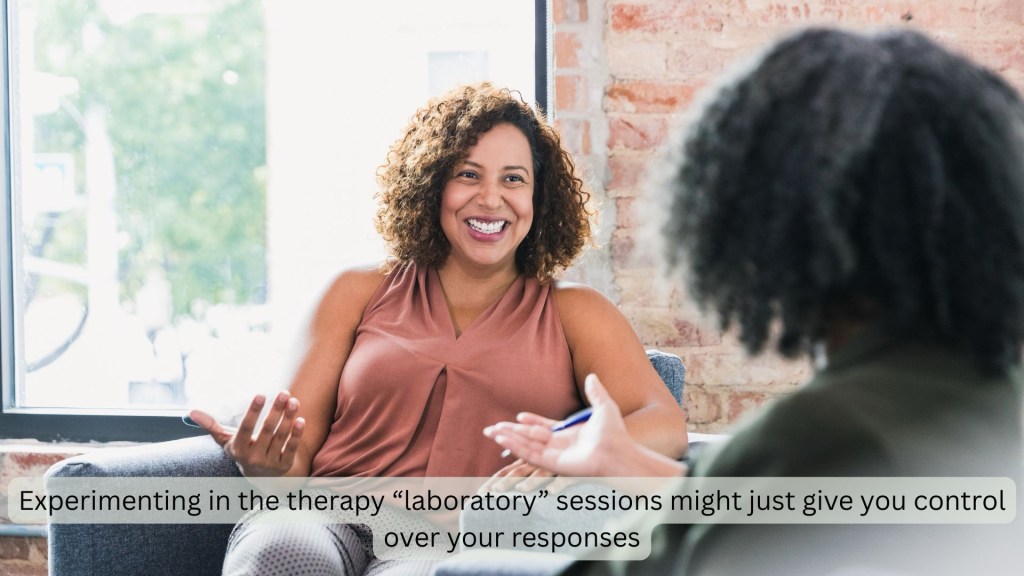
What if you really want a promotion at work and every time you get into the manager’s office, for some reason you avoid the discussion. Replaying old patterns of behaviour from your childhood which leads you to avoid being seen or heard (it worked for you when you were 8 but is no longer useful). Experimenting in the therapy “laboratory” sessions might just give you control over your responses, some confidence and fresh awareness in your adult self. You’ve got this!
Asking for What You Need
A core component of a strong therapeutic alliance is a mutual agreement on goals and tasks. This requires you to advocate for your own needs. This is a skill that many find challenging in personal or professional lives.
- Practice: In your therapy “lab,” you might practice saying, “I don’t find this approach helpful; I need more direct feedback.”
- The Benefit: Practicing this type of agency helps rebuild a sense of self-directedness and environmental mastery, which are essential for long-term well-being.
Moving from the Lab to the World
The goal of the therapy “lab” isn’t just to feel better. It’s to build a set of internal tools you can carry with you. By experimenting with vulnerability, boundaries, and self-advocacy in a safe space, you are developing your sense of self and confidence in relationships with others.
 Barefoot Psychotherapist
Leave a comment